Wednesday, July 13, 2016

Karbonn Aura Power arrives in India with Big Battery and 4G VoLTE


karbonn aura power

Karbonn has been fairly quite in 2016 although we did touch on the Karbonn A91 Storm which launched earlier this month. The Karbonn Aura Power is the company’s latest handset gearing up to launch, and it has been announced for India with an affordable price tag.
Karbonn has long been known to roll out budget-friendly handsets for consumers in India. You never quite know what you are going to get from the company until you take a hard look at the specs sheet, and this time around we’re getting a handset in the entry-level class. While far from magnificent, it is certainly cheap at the equivalent of $89 bucks in U.S. greenbacks. It also has a rather large battery…
The most attractive feature for the Karbonn Aura Power would have to be the battery, which is listed at 4,000Mah and said to provide around 17 hours of airtime. That is impressive and the camera combo isn’t bad with an 8MP rear sensor and 5MP front-facing snapper. The IPS display clocks in at 5-inches with a resolution of 854 x 480 while the chip powering the show is a 1GHz quad-core processor.
That chip will get some help from 1GB of RAM and the storage of the Karbonn Aura Power is meager at 8GB. Thankfully, it is expandable through the usual method. Bluetooth, GPS, Wi-Fi, Dual-SIM card slots, and 4G LTE round things out in the connectivity department. Android 5.1 will keep the show running as the aforementioned 4,000mAh battery keeps the lights on.
If you are interested in the Karbonn Aura Power, it will be available to purchase in Dark Blue or Champagne if you reside in India. The price is currently listed at Rs. 5,990, which is right around £67/$89.
Read more about: Mobile Phones  Karbonn has been fairly quite in 2016 although we did touch on the Karbonn A91 Storm which launched earlier this month. The Karbonn Aura Power is the company’s latest handset gearing up to launch, and it has been announced for India with an affordable price tag.
Karbonn has long been known to roll out budget-friendly handsets for consumers in India. You never quite know what you are going to get from the company until you take a hard look at the specs sheet, and this time around we’re getting a handset in the entry-level class. While far from magnificent, it is certainly cheap at the equivalent of $89 bucks in U.S. greenbacks. It also has a rather large battery…
The most attractive feature for the Karbonn Aura Power would have to be the battery, which is listed at 4,000Mah and said to provide around 17 hours of airtime. That is impressive and the camera combo isn’t bad with an 8MP rear sensor and 5MP front-facing snapper. The IPS display clocks in at 5-inches with a resolution of 854 x 480 while the chip powering the show is a 1GHz quad-core processor.
That chip will get some help from 1GB of RAM and the storage of the Karbonn Aura Power is meager at 8GB. Thankfully, it is expandable through the usual method. Bluetooth, GPS, Wi-Fi, Dual-SIM card slots, and 4G LTE round things out in the connectivity department. Android 5.1 will keep the show running as the aforementioned 4,000mAh battery keeps the lights on.
If you are interested in the Karbonn Aura Power, it will be available to purchase in Dark Blue or Champagne if you reside in India. The price is currently listed at Rs. 5,990, which is right around £67/$89.Karbonn has been fairly quite in 2016 although we did touch on the Karbonn A91 Storm which launched earlier this month. The Karbonn Aura Power is the company’s latest handset gearing up to launch, and it has been announced for India with an affordable price tag.
Karbonn has long been known to roll out budget-friendly handsets for consumers in India. You never quite know what you are going to get from the company until you take a hard look at the specs sheet, and this time around we’re getting a handset in the entry-level class. While far from magnificent, it is certainly cheap at the equivalent of $89 bucks in U.S. greenbacks. It also has a rather large battery…
The most attractive feature for the Karbonn Aura Power would have to be the battery, which is listed at 4,000Mah and said to provide around 17 hours of airtime. That is impressive and the camera combo isn’t bad with an 8MP rear sensor and 5MP front-facing snapper. The IPS display clocks in at 5-inches with a resolution of 854 x 480 while the chip powering the show is a 1GHz quad-core processor.
That chip will get some help from 1GB of RAM and the storage of the Karbonn Aura Power is meager at 8GB. Thankfully, it is expandable through the usual method. Bluetooth, GPS, Wi-Fi, Dual-SIM card slots, and 4G LTE round things out in the connectivity department. Android 5.1 will keep the show running as the aforementioned 4,000mAh battery keeps the lights on.
If you are interested in the Karbonn Aura Power, it will be available to purchase in Dark Blue or Champagne if you reside in India. The price is currently listed at Rs. 5,990, which is right around £67/$89.

karbonn aura power

Samsung Galaxy S6 Edge gaming performance review

A really hot smartphone right now is the newly released Samsung Galaxy S6 Edge, the curved edge more expensive compatriot of the Galaxy S6. It’s equipped with some very notable specs and also looks the part of a premium device. If you’re considering buying it and enjoy mobile gaming you might like this Samsung Galaxy S6 Edge gaming performance review.
Gaming on mobile devices is becoming an increasingly important factor for some people when purchasing a new smartphone, so it will be interesting to see how the phone copes in this respect. Key specs of the Galaxy S6 Edge include an Exynos 7420 octa-core processor, Mali-T760MP8 graphics, and 3GB of RAM. With these specs and also a 5.1-inch Super AMOLED display with Quad HD resolution of 2560 x 1440, the phone certainly looks equipped to offer a very decent gaming experience.
Below this article we’ve embedded a video from Fone Arena showing a gaming review on the Galaxy S6 Edge. It shows 6 different games being tested out on the phone and these are FIFA 15 UT, Asphalt 8, Riptide GP2, Modern Combat 5, Shadowgun, and GTA San Andreas. Throughout the 10-minute video you’ll see gameplay from all of the above on the S6 Edge, and after each section a score is given for both graphics and performance.
For instance, for Asphalt 8 a rating of 5/5 stars is given for each category. At the conclusion of the review you’ll also see an overall rating given but we won’t give that away here. However, from the example we gave, you can probably make a good guess at the result. A note is also shown that there were random graphics glitches in the GTA game due to no optimization.
It would be pleasing to hear from readers after you’ve checked out the video for yourselves. Have you now decided that the Samsung Galaxy S6 Edge is the right smartphone for you?
Source: YouTube
Read more about: Mobile Phones   Samsung   Video  
Samsung Galaxy S6 Edge gaming review

Samsung Galaxy J3 (2016) review

Test du Samsung Galaxy J3 (2016) : une belle évolution de la gamme

Samsung est décidément une marque fidèle a elle-même, capable de lancer régulièrement une quantité hallucinante de nouveaux modèles… dont, entre autres, le tout nouveau Samsung Galaxy J3 2016 (aussi appelé Samsung Galaxy J3 6) .
Un mobile qui reprendre une grande partie de la plateforme de modèle de la gamme J commercialisée en 2015, en les rendant plus accessibles (du point de vue tarif j’entends).
Et ce J3 2016 (connu en Europe sous la référence SM-J320FN) semble posséder tous les atouts nécessaires pour en faire le best-seller attendu par le constructeur, à l’instar d’autres modèles telles que le J1 2015, leJ5 2015, etc.
Un téléphone qui en avril 2016 (au moment de sa commercialisation) est vendu au prix maximum conseillé de 189€.                                                                                                                                

1. Esthétique : du pur Samsung

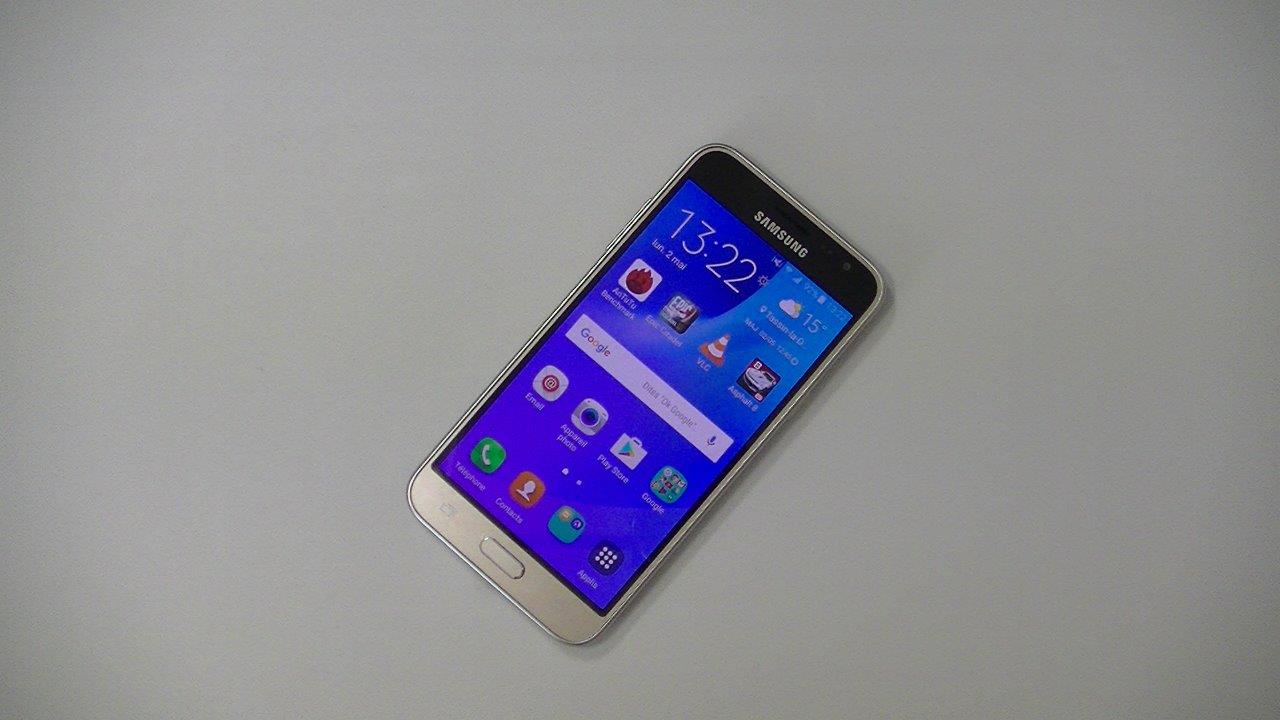
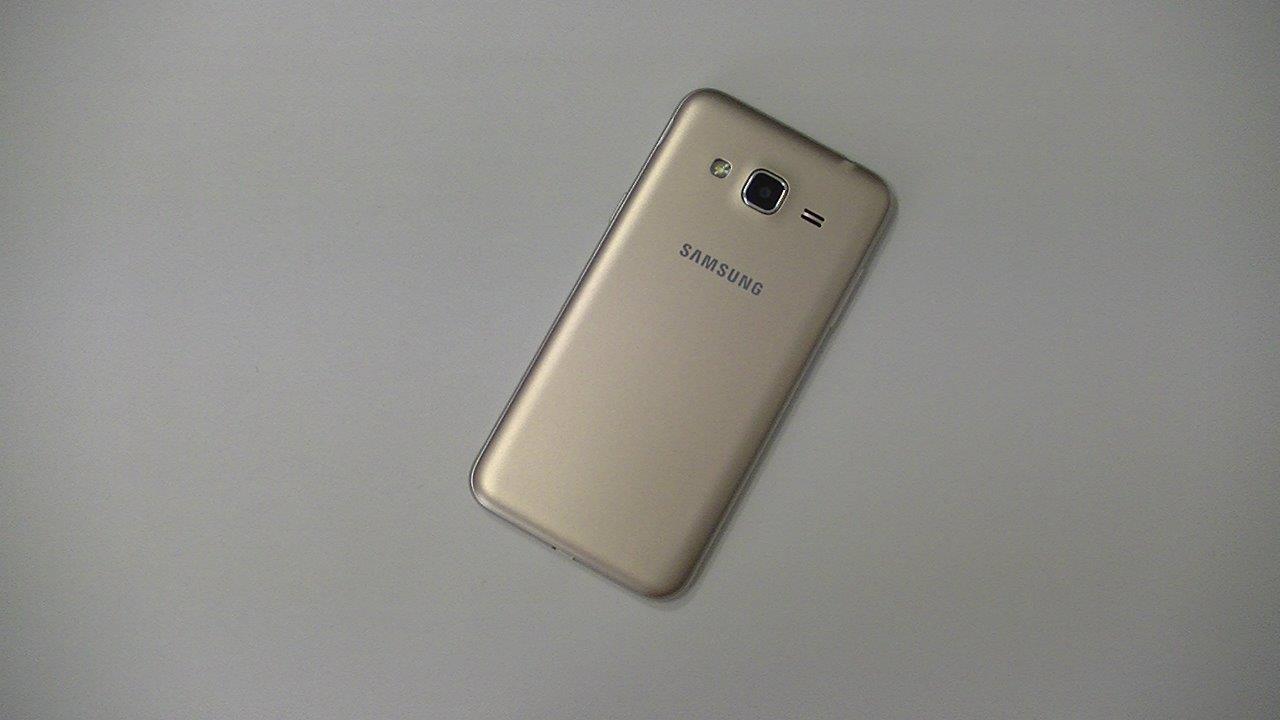
Test du Samsung Galaxy J3 2016 - vue 04Aucun doute, ce J3 2016 est un pur produit Samsung. Et son look ne trompe pas.
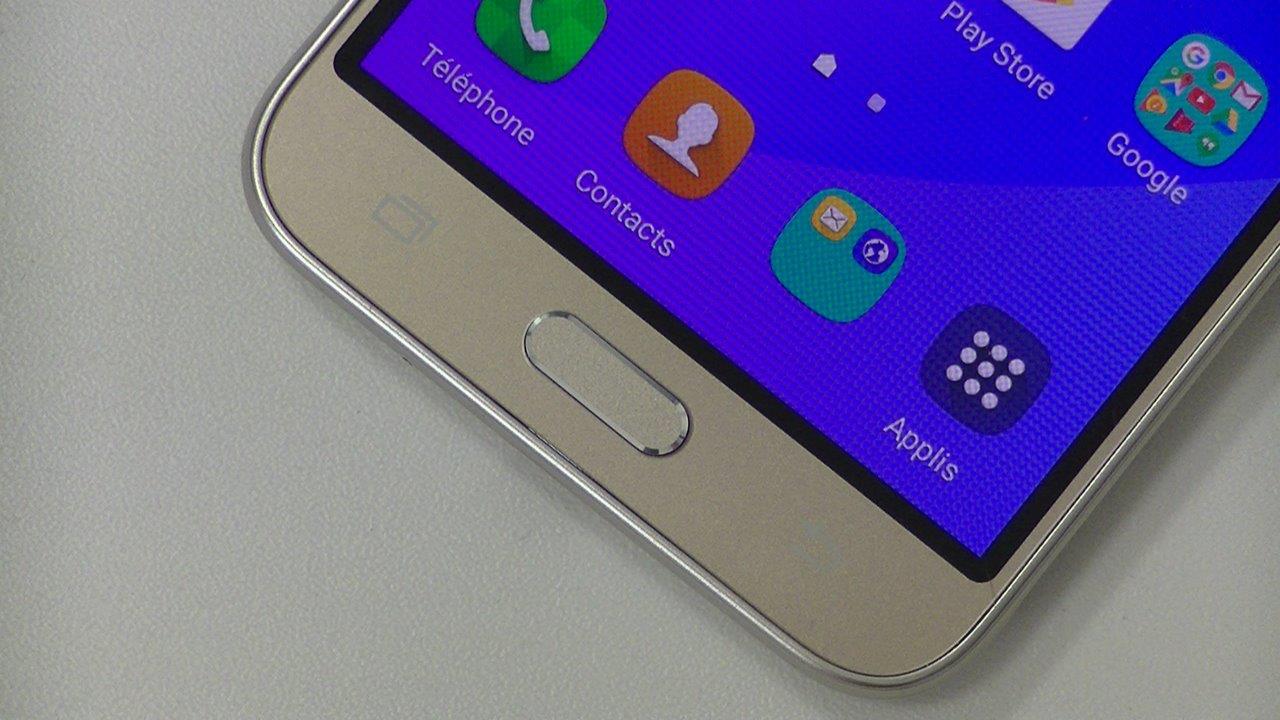
Ce qui se traduit par un design tout en courbe et un bouton physique « accueil » à la forme si caractéristique.
La prise en main est assez « particulière »… car le téléphone étant relativement « rond », et doté d’un plastique lisse, on a vite fait de le voir glisser.
Donc, gare aux chutes… il faudra le tenir fermement.
Pour ce qui est de la finition, elle est, comme toujours avec Samsung, irréprochable.
Même si l’ensemble du mobile est construit en plastique, il n’y a aucun jeu dans les éléments, et le tout ne donne pas un sentiment de « cheap ».
Un téléphone que l’on peut retrouver en 3 versions couleurs : dorée (la version testée), blanche ou bien encore noire.
  • Dimensions : 14,2 cm de long x 7,1 cm de large x 0,8 cm d’épaisseur | Poids : 138 grammes

2. Image et son : bel écran pour un entrée de gamme

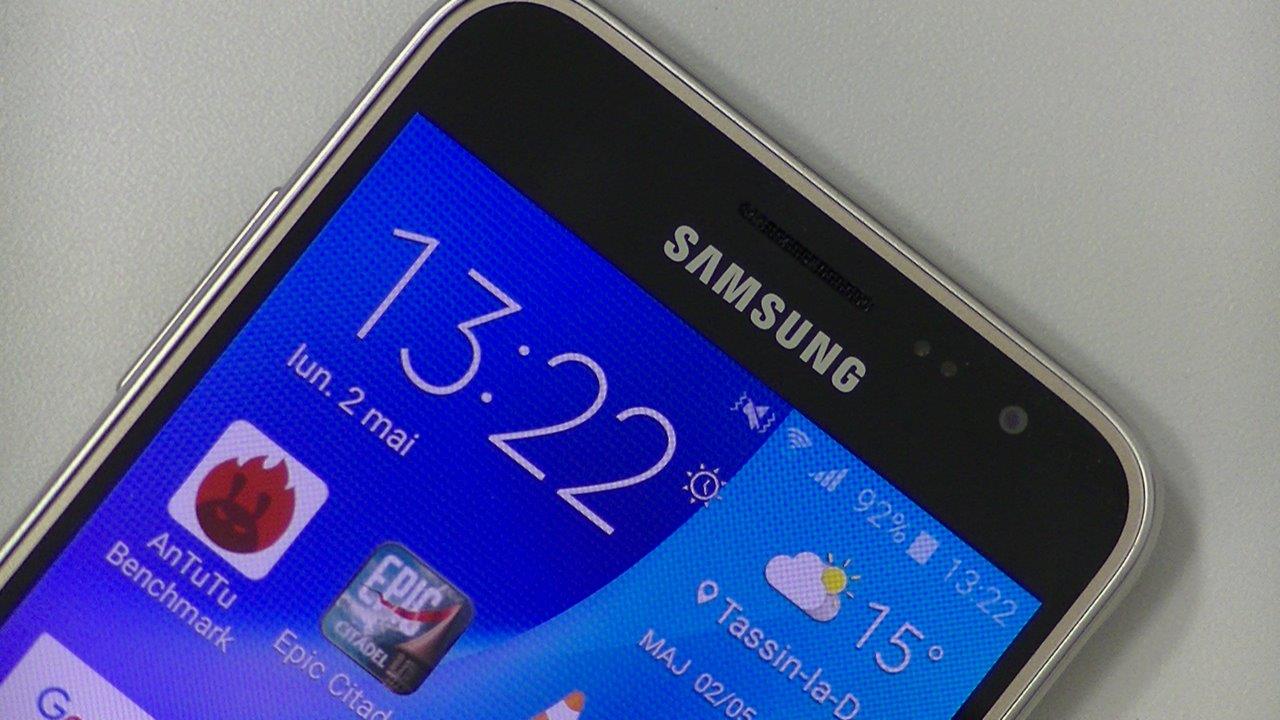
Test du Samsung Galaxy J3 2016 - vue 07Il s’agit clairement d’un des points forts de ce mobile.
Son bel écran utilise la technologie « maison » de Samsung… s’agissant d’un Super AMOLED.
En conséquence, l’image est contrastée, avec des noirs vraiment profonds, les couleurs sont vives et la luminosité est bonne.
En outre, on dispose ici une belle résolution HD 720p, encore rare sur des mobiles entrée de gamme.
En 2015, n’oublions pas qu’au même niveau de prix, Samsung proposait des écrans 540p (voir le test du Samsung Galaxy Grand Prime).
Pour ce qui est du son, rien de bien significatif à indiquer.
Que ce soit le son procuré par l’écouteur, le haut-parleur ou bien encore le jack 3.5
On notera simplement qu’une fois encore, le haut-parleur est positionné au dos de l’appareil, ce qui donnera un son étouffé lorsque ce dernier est posé sur une table…
  • Ecran : 5 pouces (Super AMOLED) avec résolution HD (1280 x 720 pixels), soit donc une densité de 294ppp.
  • Son : jack 3.5 et haut-parleur dorsal mono. Écouteur classique.

3. Performances : très raisonnables

Test du Samsung Galaxy J3 2016 - vue 11Non, le J3 6 n’est pas une bête de course, loin de là…
Il s’agit même d’un mobile plutôt « raisonnable » si on prend en considération ses performances et son score Antutu relativement bas (et à des années lumières d’un S7).
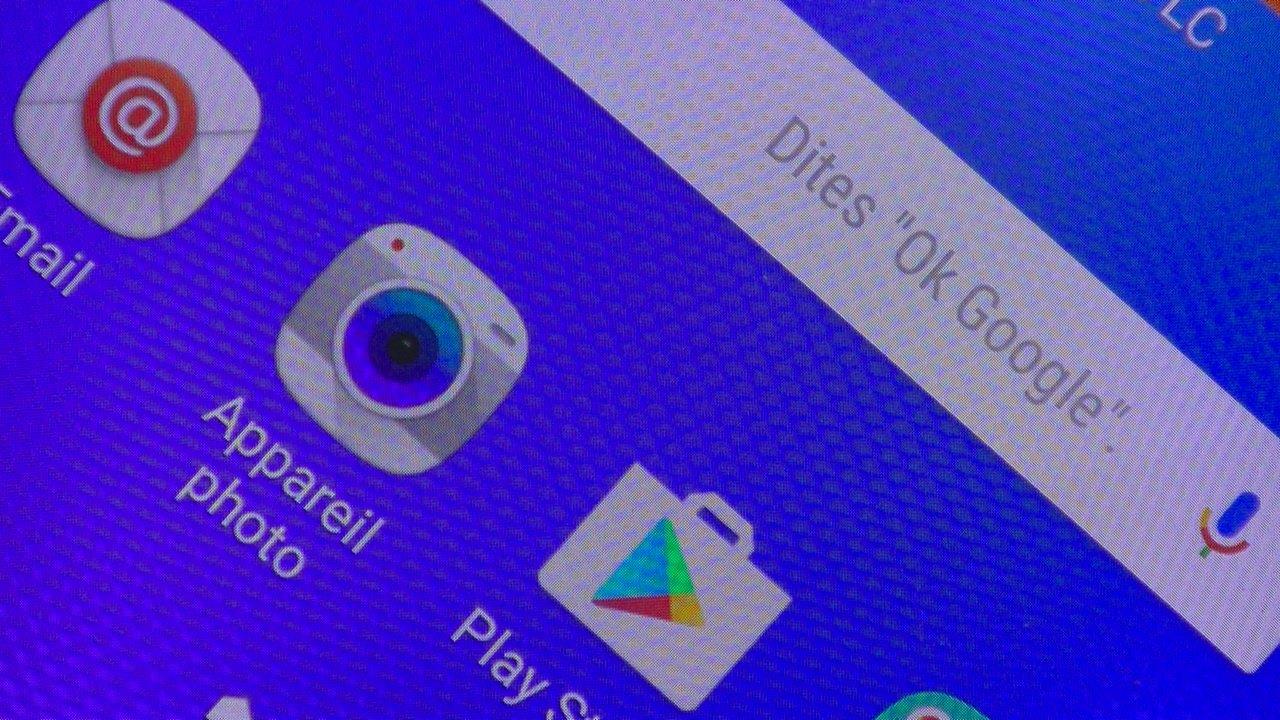
Cependant, ce mobile n’a aucun problème pour faire fonctionner un gros jeu 3D (testé avec Asphalt 8 en mode qualité graphique « élevé », ainsi que Real Racing 3).
L’image est donc fluide, comme le prouvent les tests réalisés avec Epic Citadel (49,3 images par seconde en mode « hautes performances »).
Même chose pour le multitâches, ce mobile bénéficiant de 2 points bons qui lui évitent de « laguer/frizer/buguer » : une bonne quantité de mémoire vive, ainsi qu’une surcouche donc la gourmandise est moindre que celle des précédentes versions.
A noter qu’il existe une version dotée de 16Go de ROM (contre le 8Go présent sur le modèle testé).
Cependant, cette version boostée n’est pas destinée à l’Europe.
  • Antutu (V6) : 26.400 points | Epic Citadel : 47,2 ips (en mode « haute qualité »).
  • Processeur : Quatre-coeurs 1,5GHz 32 bits (Spreadtrum SC7731) | Mémoire vive : 1,5Go  |Processeur graphique : Mali 400MP
  • Mémoire de stockage : 8Go de mémoire qui se transforme en 4,3Go lors du premier démarrage.

4. Connectivité : complète

Test du Samsung Galaxy J3 2016 - vue 14Il est vrai que depuis quelques mois, même les plus entrée de gamme des smartphones disposent d’une connexion 4G… à tel point que l’on peut se demander ce qu’il reste aux mobiles ultra-haut de gamme sur ce point.
A une exceptions près (l’infrarouge) ce mobile ne démérite pas face à des téléphones vendus 700€ et plus en 2016.
On a donc ici une connexion 2G/3G/4G LTE, doublée d’une connexion GSM quadribandes (utile si vous voyagez souvent à l’étranger).
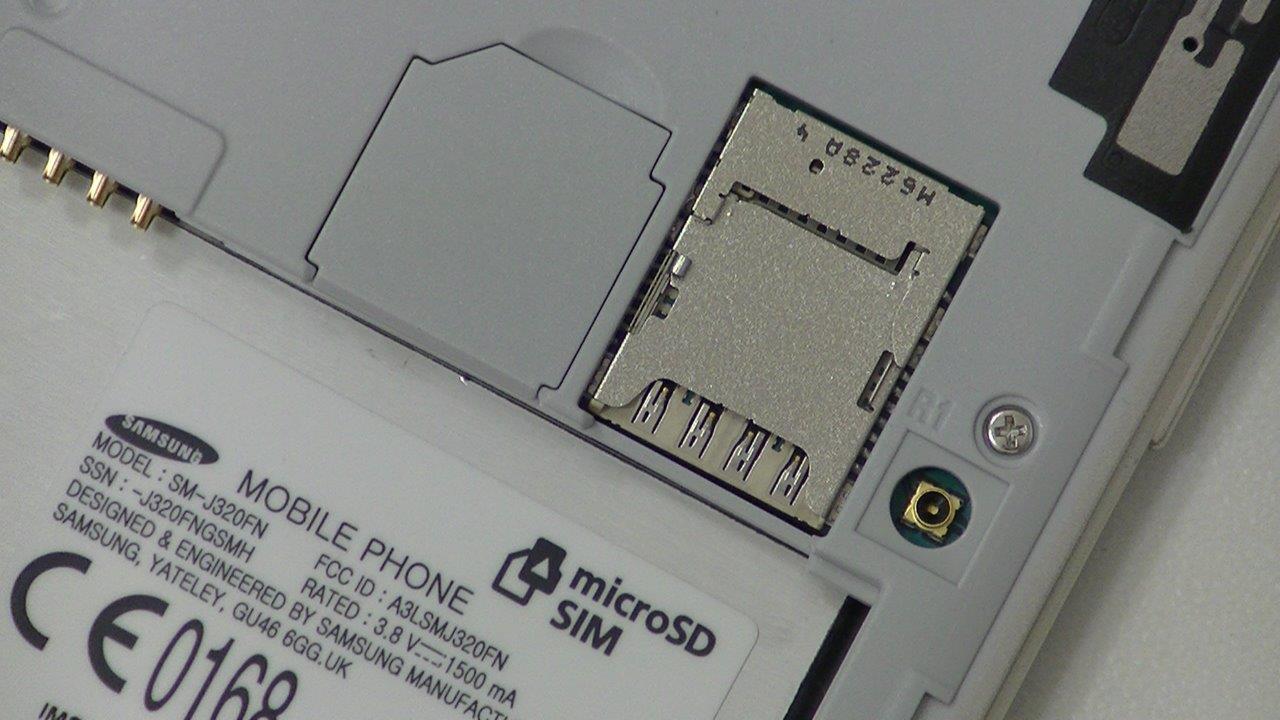
Et naturellement, on retrouve toute la panoplie d’autres connexions : WiFi (b/g/n), bluetooth (4.0), aGPS/GLONASS, micro USB (2.0), NFC (avec fonction « paiement »), radio FM, emplacement pour carte sim (format « micro »), etc.
Comme on s’y attend, ce téléphone n’a montré aucune problème tant pour l’accroche que pour la stabilité du signal.
Et ce, que ce soit en GSM, 3G/4G, WiFi, etc.
Edit : Cependant, pour ce qui est des capteurs, certains montrent clairement leur absence ce qui pourrait embêter certains utilisateurs.
Car si on dispose bien d’un capteur de proximité et d’un accéléromètre, il manque la boussole, le gyroscope, ainsi que le capteur de luminosité… dommage.
  • DAS (Débit d’Absorption Spécifique) : 0,48w/kg. C’est un score tout à fait correct (dans la bonne norme) des mobiles conçus et commercialisés en 2016.

5. Système d’exploitation : Android légèrement Samsung-isé

Test du Samsung Galaxy J3 2016 - vue 12Aucune surprise, et on retrouve en toute logique sur un mobile Samsung (encore plus un « Galaxy »), un système d’exploitation Android.
La version 5.1 « Lollipop » pour être plus précis, dont il est clair qu’il ne sera jamais mise à jour en 6.0 « Marshmallow » (et encore moins en version 7.0).
Un système efficace et apprécié, qui a bénéficier du traitement du constructeur, qui lui a adjoint une sympathique surcouche.
Sympathique, car elle est intuitive et ne consomme pas autant de ressources que les versions précédentes, qui étaient « too much ».
On est donc pas sur l’abondance d’effets spéciaux offerts par les mobiles de la gamme « S », mais malgré tout, il y a du bon.
A ce titre, on peut citer :
- S Planner : une sorte de Google Agenda au look retravaillé. Pas révolutionnaire, mais plus design.
- Galaxy Apps : une sorte de Play Store avec des recommandations de Samsung.
- Smart Manager : qui permet de gérer l’autonomie du smartphone, ainsi que sa mémoire interne, sa mémoire vive, etc.
- Microsoft Apps : on sent que Samsung et Microsoft ont un accord, et on a des applications telles que Excel, PowerPoint, Word et (jusqu’à) 100Go d’espace sur OneDrive.
- Paramètres > Thèmes : permet de personnaliser facilement son mobile (certains thèmes sont payants).
  • Système d’exploitation : Android 5.1.1 « Lollipop » | Surcouche : Samsung « TouchWiz ».

6. Usage : qualité photo correcte

Test du Samsung Galaxy J3 2016 - vue 10Inutile de nous attarder sur les fonctions de base d’un téléphone moderne, que ce soit la gestion des appels/SMS/MMS/emails, mais aussi le surf sur Internet ou encore la lecture de mp3/vidéos…
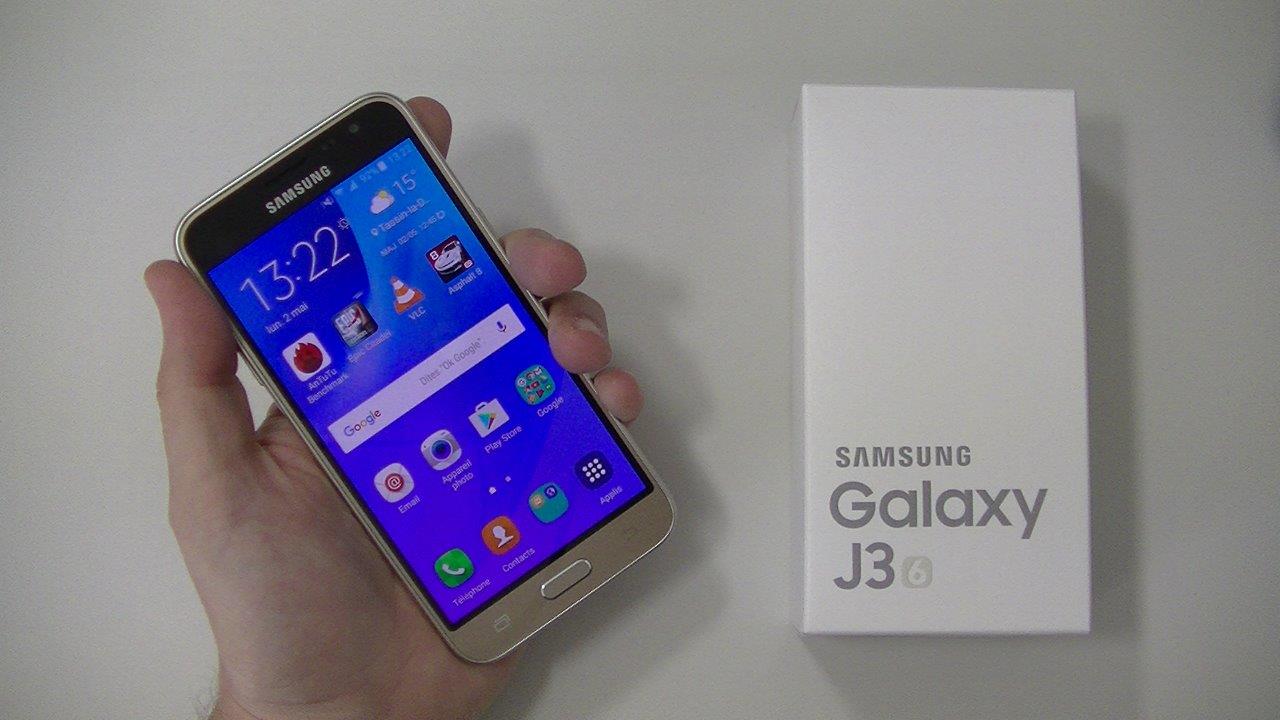
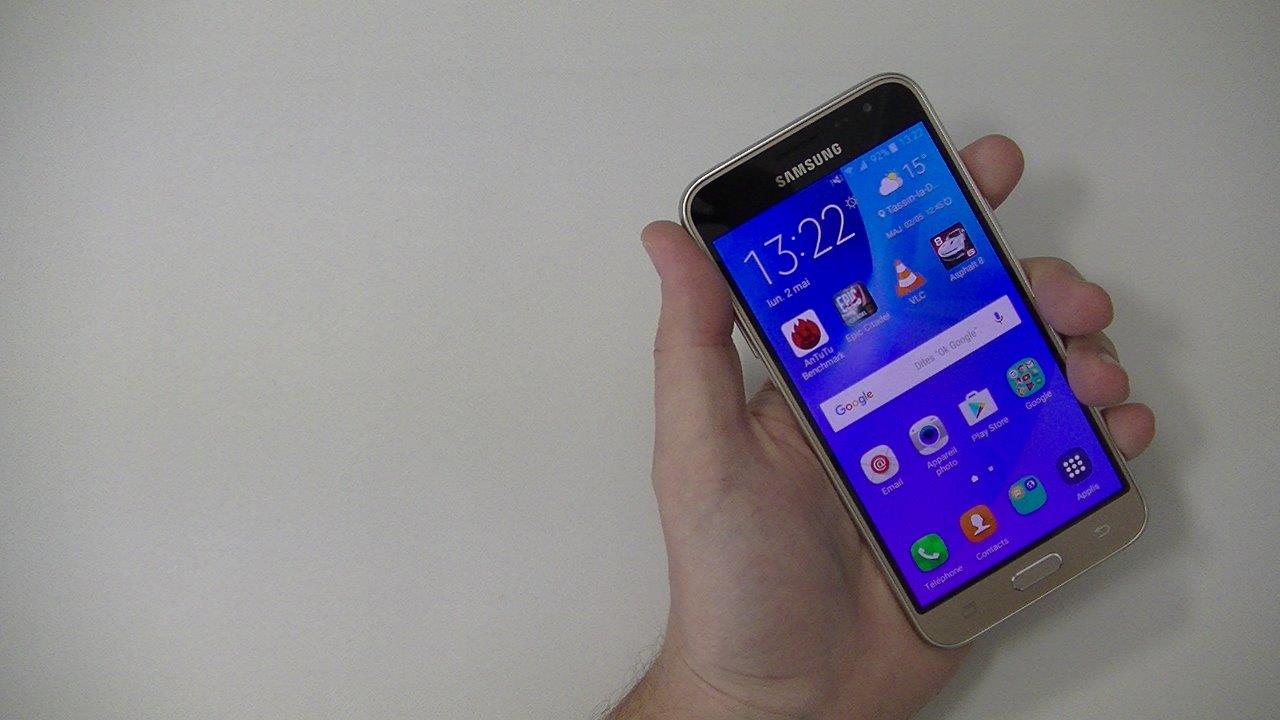
Même chose pour les jeux 3D que nous avons traité dans la partie « Performances ».
Il reste donc 2 usages qui, de nos jours, permettent de distinguer les smartphones entre eux.
Et ce sont la qualité des capteurs photos, et l’autonomie.
Pour ce qui est de la qualité photo, ce mobile prouve que le nombre de méga-pixels ne fait pas la qualité… avoir un gros capteur plein de MP ne donne donc pas forcément la meilleure photo.
Et ici, c’est bien le cas, car avec un « petit » capteur dorsal de 8MP, ce téléphone offre de bonnes photos. A la qualité tout à fait décente.
Le capteur frontal permettra quant à lui de prendre des selfies de bonne qualité… ou plus précisément, de qualité acceptable pour un smartphone qui ne se veut pas être un « selfie-phone ».
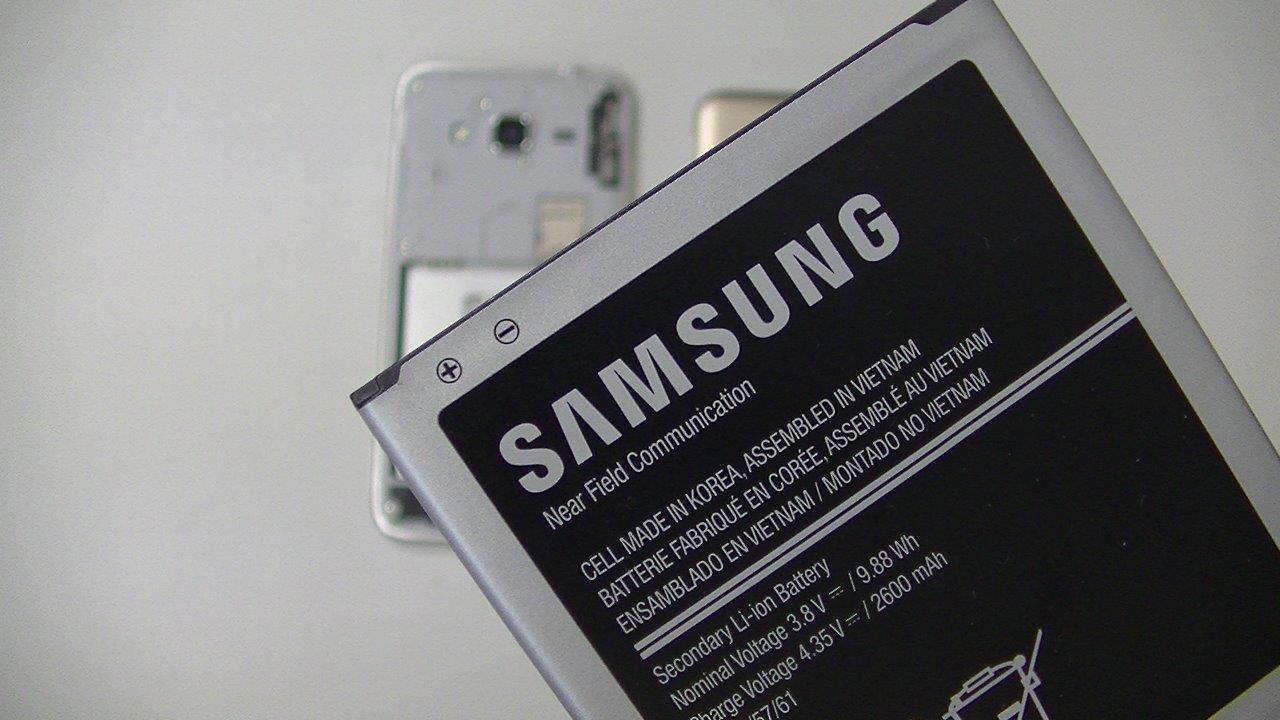
Pour ce qui est de l’autonomie, la batterie de 2.600 mAh semble être parfaitement adaptée à ce mobile (même si on aurait aimé avoir plus gros) et lui permet de dépasser aisément une journée avant la recharge.
D’autant que le J3 2016 dispose du mode « économie » d’énergie et du mode « ultra économie d’énergie » qui permettent d’allonger l’autonomie du mobile en réduisant la fréquence du processeur, en désactivant des connexions, en limitant les tâches de fond, etc.
  • Appareil photo dorsal :  8MP avec autofocus (efficace, avec détection des visages) et flash LED. Films en 1080p 30fps. Voir un échantillon photo.
  • Appareil photo frontal : 5MP. Voir un échantillon photo.
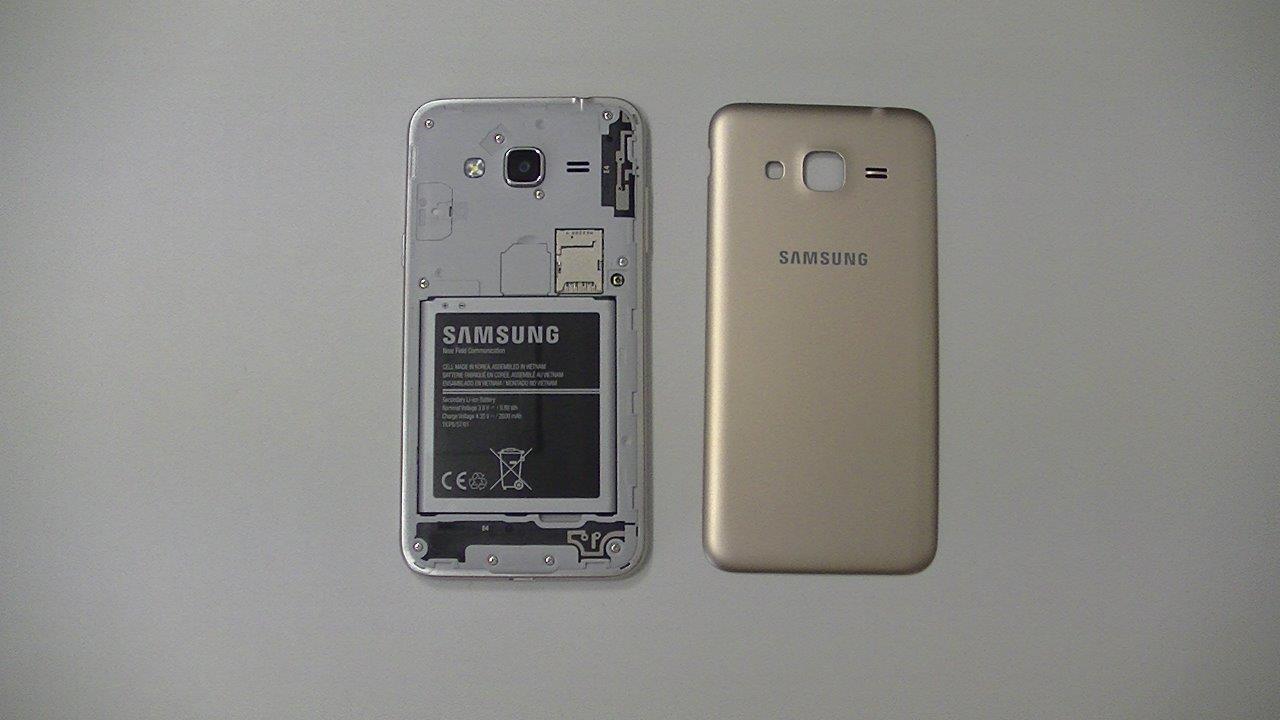
  • Batterie : Extractible de 2.600 mAh. Fonction économite d’énergie. 1 heure de vidéo consommera 18% d’énergie.

En conclusion : bon rapport satisfaction/prix

Sans être la meilleure affaire de l’année 2016, ce Samsung Galaxy J3 2016 est un bon mobile.
Un smartphone sympathique, vendu (dès son lancement) à un prix qui me semble adaptée et juste, et qui va se confronter à une armada entière de téléphones proposées par des concurrents tous plus énervés les uns que les autres (on pourra notamment citer un de nos derniers tests : LG K10).
Le J3 2016 ne brille pas par ses performances, qui sont au mieux, adaptées à ce moibile et aux applications/jeux qu’on lancera avec lui.
Cependant, pour tout le reste, nous sommes sur du tout à fait satisfaisant.
Si certains regretterons le design « tout plastique » du mobile (et pour ma part, le côté trop glissant du dos) on ne pourra pas trouver d’autres points négatifs à ce téléphone qui est, je le rappelle, un entrée de gamme vendu à moins de 200€).
Un mobile qui offre donc un bon rapport satisfaction/prix.
A des années lumières des coûteux et déraisonnables S7 et S7 Edge, certes, mais qui vous donnera un réel plaisir d’utilisation, et calmera votre banquier.
  • Les plus : design agréable, bel écran, connectivité complète, surcouche efficace et peu gourmande.
  • Les moins : design un peu trop plastique et lisse/glissant. performances justes (mais acceptables).

Galerie photos :

Samsung mobile en 2014, entre S5, Note 4 et la nouvelle version de sa smartwatch, le programme est chargé

À l’occasion d’une longue interview avec Bloomberg News, les représentants de Samsung ont indiqué qu’ils comptaient sortir le Galaxy S5 en avril prochain tout en envisageant une technologie de reconnaissance oculaire. C’est bien entendu pour répondre au décodeur d’empreinte digitale qu’Apple avait ajouté à son iPhone 5S que le constructeur coréen envisage un tel gadget de sécurité.
Par ailleurs, le Vice-Président en charge de l’activité mobile de Samsung, Lee Young-hee, a indiqué qu’une nouvelle version de leur smartwatch maison, la Galaxy Gear, devrait être commercialisée simultanément au S5. La montre connectée devrait être moins encombrante tout en proposant des fonctionnalités plus riches.  Quant à la gamme du phablet de Samsung, le Galaxy Note, il est envisagé pour sa quatrième version de fournir un écran avec trois angles de vue. Comment est-ce possible ? Et bien, en théorie c’est simple. L’écran du téléphone serait incurvé des deux côtés et afficherait ainsi des informations sur les tranches de l’appareil. Franchement, si cela peut sembler farfelu au premier abord, le potentiel de ce concept nous semble fichtrement intéressant.

Lucky number 7? Everything we know about the Samsung Galaxy Note 7's specs, release date and leapfrogging name

Samsung is so over six. The company announced that it's jumping from 2015's Note 5 straight to the Note 7, skipping the Note 6 model entirely. We'll get all the details on August 2 in New York atSamsung's Note 7 "Unpacked" event.
samsung-note-versions-one-to-six-8618-002.jpg
Another Note will join this rogue's gallery.Josh Miller/CNET
Until then, it's a lot of fun trying to piece together the Note 7's identity: Will it simply iterate off of the Note 5 and S7 that came before, or will it wow us with unforetold (or hinted at and unconfirmed) hardware goodies that shake us from the eyelid-drooping expectations of smartphones today?
The most reliable rumors suggest that the Note keeps its 5.7-inch screen, but adds a USB-C port (they're all the rage) and an iris scanner for unlocking the phone with your eyes. Let's take stock of the most telling rumors. (P.S. Remember, they're unsubstantiated, so anything could happen!)

Note 7's the name, not Note 6

Chronology be damned! Early on, rumor-mongers suspected that Samsung would use the Galaxy Note 7 name and not the Galaxy Note 6, even though 2015's model was called the Note 5.
This does make a certain amount of sense. Samsung already has the Galaxy S7, which would help keep the Galaxy S and Note series in line. And when you count up Notes 1-5 and add in the little-remembered Galaxy Note Edge, this next Note would make the family's legitimate seventh addition. So there's that math for ya.
But perhaps phone-makers also have no wish to be left behind the gold standard Apple's already established and will likely continue when and if it releases its iPhone 7 this fall. We won't know for sure until Samsung expains itself, but the company remains tight-lipped for now.

Sell date: Mid-August

Samsung's Note line has been a mainstay at the IFA conference held in Berlin, Germany in late August, but the August 2 launch date suggests that the phone would sell well before IFA kicks off, and long before Apple's yearly iPhone launch in early September, which usually falls in the first two weeks of that month. Twitter tipster Evan Blass, who has built a reputation on accurate leaks, thinks that the phone will start selling around August 15.

Curved display up front

The Note 7's display will look more like the S7 Edge than the straight-faced Note 5, according to a recent rumor. Anything's possible, sure, but assuming it's true, I do wonder two things. Would the screen be just as navigable with the Note's signature pen? And with so many similarities between the Note 7 and the S7 Edge, the stylus could be the only important feature dividing the two.

Totally new software interface

New software, new name. The TouchWiz interface that Samsung has used for years to differentiate its phones from other Android-makers could see a major overhaul, including a potential name change. We might kiss TouchWiz goodbye and open our arms to Grace, a more paired-down yet interactive take on phone software, shown in an allegedly leaked video (below) from Italian site HD.Blog.IT. It's suggestive even if you don't understand a lick of Italiano.
The video goes pretty deep on widgets, and transparent folder effects, but one cool reveal is that you can swipe up on an icon to see a window that opens more cool stuff. Likewise, pressing and holding on a quick-access toggle in the notifications shade may snap open extra options for you to act on, like on the flashlight and Wi-Fi settings. For instance, the video shows that you can lower the flashlight brightness and change your Wi-Fi network without having to exit the notifications pull-down.
In essence, this could make the home screen and notifications shade even more of an activities hub than they are now.
The photo gallery could expand and condense with a pinch and zoom of your fingertips.

Updated Note software, too

Samsung usually previews its freshest take on its TouchWiz (or maybe Grace?) software on the year's Note release, but the changes go down to the pen level, too. This time, according to the HDBlog.It video above, we could see a lightly refreshed style with different icons, but much the same functionality to handwrite, scribble and navigate with a touch of the S Pen to the screen.

Pressure-sensitive screen? Not too likely

From what I can see in the Italian video above (which cites the build-of-unknown-origin as "Note5"), the Note 7 doesn't look like it borrows Apple's pressure-sensitive display, which lets you press and hold until the screen gently jostles to pull up more granular data. Still, this is a persistent rumor, and one we also heard about the Galaxy S7 (it didn't happen).

Iris scanner for real this time

We've also heard tell of an iris scanner that can unlock your phone by staring you in the eye. The iris scanner loomed large in Galaxy S4 rumors, too, but turned out to be a different feature that kept the screen from locking when you looked at it often enough. Now that Microsoft's iris-scanning "Windows Hello" feature in the Lumia 950 has made the security option a reality, it's much more likely that Samsung will include a real iris scanner this time around.

Other suspected specs

  1. 5.7-inch screen
  2. 12-megapixel camera
  3. 5-megapixel front-facing camera
  4. IP68 certified against water and dust
  5. 64GB of space expandable through a microSD card
  6. USB Type-C port; Quick Charge 3.0
  7. 4,200mAh battery
  8. Black, silver, blue colors

What about Android Nougat?

Notably missing from the seething rumor mill is an indication of the Note 7's operating system. Google's Android N, revealed this week to be named Android Nougat, isn't out yet and won't be until fall, so don't expect the new Note to debut with the OS. Instead, expect Android 6.0.1 Marshmallow, with an upgrade later on, at least a few months after Google's Nexus phones get a chance to show off all that Nougat can do.

Price and availability

As a rule of thumb, Samsung's prices hover on the higher end of the scale, and a stylus-packing handset like the Note goes for more than a smaller, more mainstream model like the S7. If prices hold from 2015, expect the 64GB version of the Note 7 to sashay out for roughly $800, which converts to roughly £600 and AU$1,080. Prices will vary further by region, carrier, storage capacity and promotional deals.
Samsung responded to a request for comment by saying "we don't comment on rumors or speculation."
This article was originally published on June 28, 2016 and updates periodically. It was most recently updated on July 12 at 2:30pm PT.

SAMSUNG GALAXY S7

WHAT IS THE SAMSUNG GALAXY S7?

If you’re on the hunt for an Android phone right now, the Samsung Galaxy S7 should be very close to the top of your list. Even though the competition from the HTC 10LG G5 and the upcoming Note 6 (or Note 7) is strong, the S7 is the Korean company’s best phone yet.
The biggest threat comes from the OnePlus 3, which offers similar specs to the Galaxy S7 but for a much lower price. Still, the extra quality is here to see and it really shows.
If you want the best screen, best camera and one of the comfiest phones I have ever held then Samsung’s latest flagship is the perfect choice.
Video: Check out our review of the Galaxy S7
0:00
/
2:20

SAMSUNG GALAXY S7 – DESIGN

After the massive, and much needed, change in design direction Samsung took with the Galaxy S6 and Galaxy S6 Edge in 2015, all rumours pointed to things staying pretty much the same for the Galaxy S7.
Well, it’s not like Apple, HTC or Sony make drastic changes to their industrial design every year.
And that’s exactly the case here. Place the Galaxy S7 next to the S6 and you’d be hard pushed to instantly pick which one is which. Frankly, this doesn’t bother me in the slightest. The S6 was already one of the best-looking phones around, and the Galaxy S7 follows suit.

Read more at http://www.trustedreviews.com/samsung-galaxy-s7-review#zUjfVODBzGKsEbLt.99                             
Both the front and back are covered in Gorilla Glass 4, while a metal rim snakes in between. Two volume buttons sit on one side, with a lock/standby switch on the other. It’s a clean look, with the back free from any markings aside from a Samsung logo.
The camera lens now sits just about flush with the glass body too. This might seem a small change, but it makes a big difference. I can now tap out an email with the phone flat on my desk without it jumping and rocking from side to side.

There is one notable design change on the back – the sides now curve ever so slightly, just like they did on the larger Galaxy Note 5, and it makes a huge change to how the Galaxy S7 feels. While the S6 felt harsh and rigid, the Galaxy S7 slips softly into my palm. It’s so much more ergonomic and makes picking it up off a flat surface much easier.
And the way the sides almost melt into the glass just looks damn cool. Good job, Samsung.
It’s an absolute fingerprint magnet, though. After a few minutes of use, the entire back becomes a grubby mess that needs wiping down with a microfibre cloth.
Along the top is the Nano SIM tray, which now holds a microSD slot, plus a microphone. The bottom houses the headphone socket, another microphone, a speaker and a micro USB port for charging.
That speaker is one of the few missteps on this phone. It’s downward-facing, gets easily blocked by my hands when playing a game and it sounds tinny and distorted at high volume. I guess front-facing speakers weren’t included so the screen surround could be kept minimal, but it’s still a disappointment when a speaker sounds this bad.
It had been suggested that Samsung would make a big switch to the new, reversible USB-C connector that’s already being used on the Nexus 6P, OnePlus 2 and LG G5, but it hasn’t.
To be honest, USB–C is more of a hindrance than a help at the minute. You can’t use any of the cables you’ve picked up over the years and it doesn’t necessarily mean faster charging. It does mean the S7 isn’t quite so future proof, though.
The front again has a clean look about it. The elongated home button still sits under the display, and it still juts out ever so slightly, rather than being concave like the iPhone’s. For me, this is a plus – it feels better pressing the Galaxy S7’s home button than the iPhone 6S’s – but a couple of the TrustedReviews team think otherwise. They’re wrong, of course, but it’s interesting how such a small design choice can split people.
Galaxy S7 13
Housed inside the home button is a really fast and accurate fingerprint sensor that matches the iPhone 6S’s for speed, but it’s marginally slower than the Nexus 6P’s. That difference is minimal, though, and something you would only notice if you had the two side by side.
It’s clear from the Galaxy S7 that Samsung is listening to customer feedback and bringing back favoured features from the Galaxy back catalogue. MicroSD expansion is one, and IP68 water resistance is another.
The latter is by no means a vital feature, yet it’s impressive that it’s been added without any forced changes to the design. There are no flaps, there’s no added thickness and no extra space between the display and glass.
What does an IP68 rating mean? Well, you’ll be able to dunk the Galaxy S7 into 1m of water for up to 30 minutes without damaging the phone. Or, if you’re like Lil’ Wayne, you can douse it in multiple bottles of champagne. Obviously.
It’s become a cliche that phones get thinner and thinner each year, but that isn’t the case with the S7. It’s marginally thicker than its predecessor and has a nice weight to it. It feels dense and expensive, though not as delicate as you’d expect from a phone with glass on the front and back. I dropped it about four foot onto a hard floor and it survived without any problems.
Samsung has stuck with the same 5.1-inch display, there’s the Galaxy S7 Edge if you want something bigger, and it’s refreshing to have a flagship phone that feels this compact and easy to hold. It’s roughly the same size as the iPhone 6S, which only has a 4.7-inch screen, and much smaller than top-end devices from LG, Huawei and Google.
Coming from using the S7 Edge, I was initially a little underwhelmed by the Galaxy S7. It didn’t quite have that wow factor its curvier sibling does. But after a while it became my favourite phone to use on a daily basis. It feels great, is the perfect size and doesn’t make any sacrifices – aside from maybe the speakers – to get there.
s7 7

SAMSUNG GALAXY S7 – DISPLAY

Close to perfection. That’s the best way to describe the display on Samsung’s Galaxy S7.
Not much has really changed from the outgoing S6, but this still holds up as the best screen on a smartphone.
It’s still a 5.1-inch QHD panel with a 2560 x 1440 resolution, and just like every Galaxy flagship so far, it uses Samsung’s Super AMOLED tech, rather than the more common LCD.
AMOLED displays are a lot better at showing off blacks than LCDs. Instead of looking slightly grey and washed out, the blacks here are inky deep. Some say AMOLED screens produce colours that are too oversaturated, so reds will look way brighter than they should, but that isn’t much of an issue here. And if you really prefer things toned down, there’s a picture setting for that.
Having so many pixels jammed into a relatively small space means you can’t really spot one pixel from another, and that sharpness makes everything from gaming to watching YouTube an absolute pleasure. Play a round of Alto’s Adventure or Monument Valley on this display and you’ll instantly be drawn in by the crisp details and vivid colour reproduction.
I wouldn’t normally watch a film on a screen this size, but the panel here is so gorgeous that I can’t help getting lost in it.
Galaxy S7 4
The one thing that has changed this time around is the addition of a new ‘Always-on’ display.
Due to the way AMOLED screens work, they don’t need to light up the whole display all of the time. They can select individual pixels and just show them, keeping everything else off. So, when the Galaxy S7 is locked it can still show the time, date and a couple of bits of other information on the screen without eating through too much battery.
It’s a nice touch, and great for quickly checking the time when the phone is resting on your desk or a bedside table. But it’s a good software update or two short of being really useful.
First off, it’ll only show notifications from a few apps – it’s currently limited to Samsung’s own Messages, Email and Phone. If you, like me, regularly use WhatsApp, Gmail and Facebook Messenger, none of these will appear. That’s a shame, and makes the notification side of things a lot less useful.
I’d also like a lot more control over the mode. There’s no setting to alter the brightness, which causes some problems when you’re in a darker room, and aside from choosing whether or not you want a calendar showing, there’s no customisation allowed.
s7 9
It uses extra battery too. About 1-2% per hour, so 15% or so per day. It’s just about worth it, but it could be so much better.
My only gripe with the display on the Samsung Galaxy S7 is that, in sunny conditions, it can be quite hard to read – certainly more so than the LCD panel on the iPhone 6S. Even with the brightness jacked all the way up, you’ll have to tilt the screen or find some shade to stop yourself squinting at it.
Thankfully, unlike the Galaxy S7 Edge, it has great viewing angles and doesn’t suffer from white backgrounds getting tinged with blue.

Read more at http://www.trustedreviews.com/samsung-galaxy-s7-review#zUjfVODBzGKsEbLt.99